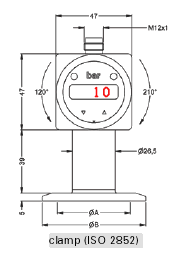
Monitoring pressurized steam within an industrial chamber requires a specialized interface that can withstand high thermal loads while maintaining strict hygienic standards. This application story explores the integration of a multifunctional pressure instrument designed to automate a dump valve trigger, ensuring process safety and consistency in food and pharmaceutical packaging environments.
- Automated dump valve control via programmable PNP switching.
- Thermal protection for electronics using an integrated cooling element.
- Hygienic flush-welded diaphragm to prevent media entrapment and bacterial growth.
- Continuous remote monitoring combined with local digital visualization.
The requirement involves the precise monitoring of steam pressure within a processing chamber, where maintaining a specific environment is critical for sterilization or heating cycles. In this setup, the instrument must identify when internal pressure reaches a 10 psi threshold to trigger a dump valve, effectively venting the system. Because the application utilizes steam, the primary technical challenge is the elevated temperature of the media, which can exceed the operating limits of standard electronic sensing components. To address this, the solution utilizes a DS200P series combined pressure sensor, display and switch with thermal decoupling through an integrated cooling element. This mechanical extension acts as a heat sink, allowing the media temperature at the process connection to reach up to 200°C while ensuring the internal electronics remain within a safe operating range.
In processing and packaging lines—particularly those involving food, beverages, or pharmaceuticals—sanitary integrity is paramount. Traditional pressure ports with internal cavities can trap moisture or organic matter, leading to contamination. The solution implemented here features a flush-welded stainless steel diaphragm. By eliminating dead spaces and crevices, the instrument supports Clean-in-Place (CIP) and Sterilize-in-Place (SIP) protocols. The diaphragm material, 1.4435 (316L) stainless steel, provides excellent corrosion resistance against steam and aggressive cleaning agents. Furthermore, the use of FDA-compliant food-grade filling oil ensures that in the unlikely event of a diaphragm breach, the process media remains untainted.
The control logic for the dump valve is managed through an integrated PNP switch output. Unlike simple mechanical switches, this electronic configuration allows for highly precise adjustment of switch-on and switch-off points. This is particularly useful for managing hysteresis, preventing the valve from “chattering” or rapidly cycling if the pressure fluctuates near the 10 psi setpoint. The operator can configure these parameters directly via a rotatable, four-digit LED display module, which provides immediate local pressure readings for maintenance teams on the factory floor.
Beyond the localized switching function, the instrument provides a continuous 4-20mA analogue signal. This dual-functionality allows the device to act as both a safety switch and a high-resolution transmitter, feeding real-time pressure data back to a centralized PLC or SCADA system. This level of integration is ideal for high-speed packaging machinery, where both local mechanical control and remote data logging are necessary for regulatory compliance and process optimization. The 0 to 1.6 bar gauge range was specifically selected to provide optimal resolution for the 10 psi target, ensuring that the sensor operates within its most accurate performance band.
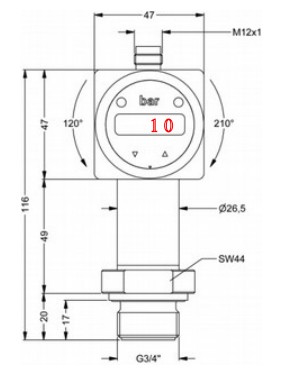
DS 200P High Temperature Hygienic Pressure Sensor, Indicator and Switch
- Part No: 785-1601-1-1-3-N11-ZS0-1-1-2-200
- Pressure Range: 1.6 bar (23.2 psi) gauge
- Analogue Output: 4 … 20 mA / 2-wire
- Contact: 1 contact
- Accuracy: 0.35%
- Electrical connection: Male plug M12x1 (5-pin) / metal
- Mechanical connection: G3/4″ with flush welded diaphragm (DIN 3852)
- Diaphragm: Stainless steel 1.4435 (316L)
- Seals: FKM
- Filling Fluids: food grade oil (FDA)
- Special Version: with cooling element up to 200°C
Request Product Price
“*” indicates required fields
PakarPBN
A Private Blog Network (PBN) is a collection of websites that are controlled by a single individual or organization and used primarily to build backlinks to a “money site” in order to influence its ranking in search engines such as Google. The core idea behind a PBN is based on the importance of backlinks in Google’s ranking algorithm. Since Google views backlinks as signals of authority and trust, some website owners attempt to artificially create these signals through a controlled network of sites.
In a typical PBN setup, the owner acquires expired or aged domains that already have existing authority, backlinks, and history. These domains are rebuilt with new content and hosted separately, often using different IP addresses, hosting providers, themes, and ownership details to make them appear unrelated. Within the content published on these sites, links are strategically placed that point to the main website the owner wants to rank higher. By doing this, the owner attempts to pass link equity (also known as “link juice”) from the PBN sites to the target website.
The purpose of a PBN is to give the impression that the target website is naturally earning links from multiple independent sources. If done effectively, this can temporarily improve keyword rankings, increase organic visibility, and drive more traffic from search results.
Streaming Film
Nonton Film gratis
Jasa Backlink
Download Anime Batch